Γ
Gamma Exposure
Explain how options positioning can create areas where dealers may hedge around price, volatility, and expiration.
Gamma Exposure / GEX
A dedicated section for gamma exposure concepts, options open interest, volume, call walls, put walls, flip levels, and how these levels can support structured trading decisions.
Chart-Based GEX Levels
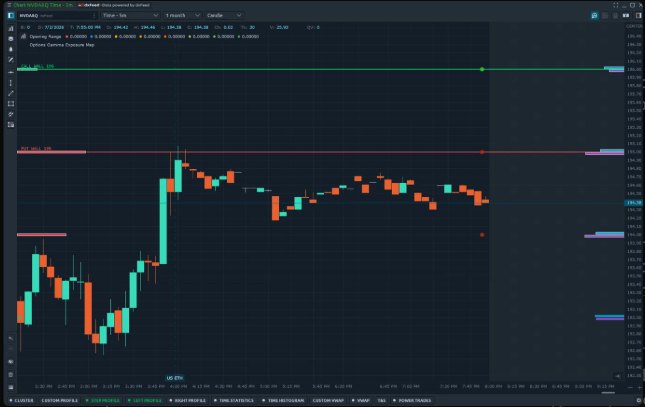
Gamma Exposure, commonly called GEX, is used to study how options positioning may influence price behavior around important strike levels. When these levels are displayed directly on a chart, traders can compare live price action against areas where options-related hedging, liquidity, and positioning may become more important.
A call wall is usually viewed as a major upside options level where call open interest or related gamma exposure is concentrated. Price can sometimes slow, reject, consolidate, or become magnetized near this area depending on market conditions. A put wall is the opposite side of the structure and is often watched as a downside area where put positioning may create support, reaction, or increased volatility.
The flip line, sometimes called a gamma flip level, is a zone where the options market may shift from one hedging behavior to another. Above or below that area, dealers and market makers may respond differently to price movement. For traders, the flip line is not a standalone buy or sell signal. It is a context level that should be combined with price action, VWAP, volume profile, order flow, session structure, and risk management.
Core Topics
Explain how options positioning can create areas where dealers may hedge around price, volatility, and expiration.
Organize open interest and volume by strike to identify large positioning zones that may act as magnets or barriers.
Document the concept of positive and negative gamma regimes and why the flip zone matters for intraday context.
Important Note
GEX data should not be treated as a standalone trade signal. The page should present the levels as context that can be combined with price action, volume profile, VWAP, trend, liquidity, and risk management.